2026-03-11
JR East Fare Hike: First Since 1987
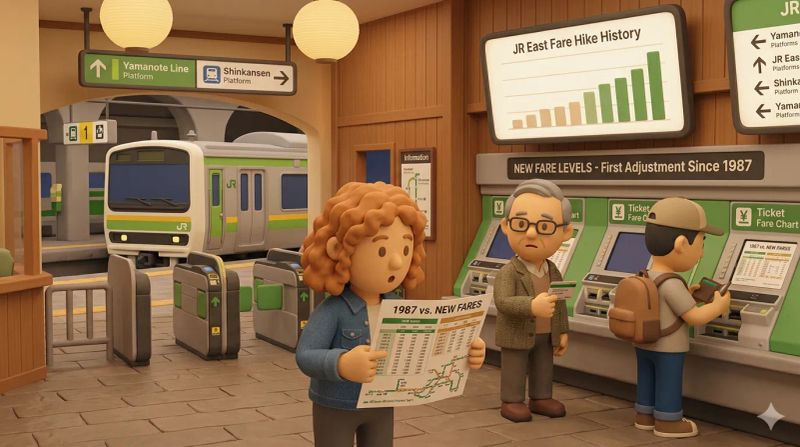
Japanese train fares are famously stable. This hike is major news because, excluding adjustments for consumption tax, base fares haven't increased since the company was privatized in 1987, reflecting decades of economic stability and efficiency.
Nisen nijūroku nen sangatsu, Jeiāru Higashi-Nihon no kippu ga sen kyūhyaku hachijū nana nen kara hajimete takaku narimasu.
In March 2026, JR East tickets will become more expensive for the first time since 1987.
Sen kyūhyaku hachijū nana nen irai, yaku yonjūnen-buri ni, Jeiāru Higashi-Nihon ga nisen nijūroku nen sangatsu ni unchin o kaitei suru koto o happyō shimashita.
JR East announced that in March 2026, it will revise its fares for the first time in approximately 40 years, since 1987.
Jeiāru Higashi-Nihon wa, Kokutetsu min'eika chokugo no sen kyūhyaku hachijū nana nen irai, shōhizeiritsu no hikiage ni tomonau kaitei o nozoki, hatsu to naru honkakuteki na unchin neage ni nisen nijūroku nen sangatsu, fumikiru hōshin da.
JR East plans to proceed with its first full-scale fare increase in March 2026, the first since 1987 just after the privatization of JNR, excluding revisions associated with consumption tax hikes.